
The political atmosphere in Telangana is intensifying as senior BRS leaders Harish Rao and K.T. Rama Rao (KTR) have strongly criticized the Congress government. Their criticisms highlight two urgent concerns: the neglect of farmers during floods and the scrapping of the ambitious Pharma City project. For many citizens, these issues are more than political debates; they strike at the heart of livelihoods, food security, and future development.
Harish Rao’s Outrage Over Floodwater Mismanagement:
Harish Rao, a former irrigation minister, did not mince words when he accused the Congress government of “criminal negligence.” With floods hitting Hyderabad, Telangana, he said massive volumes of Krishna and Godavari waters were allowed to flow into the sea while crucial reservoirs remained empty.
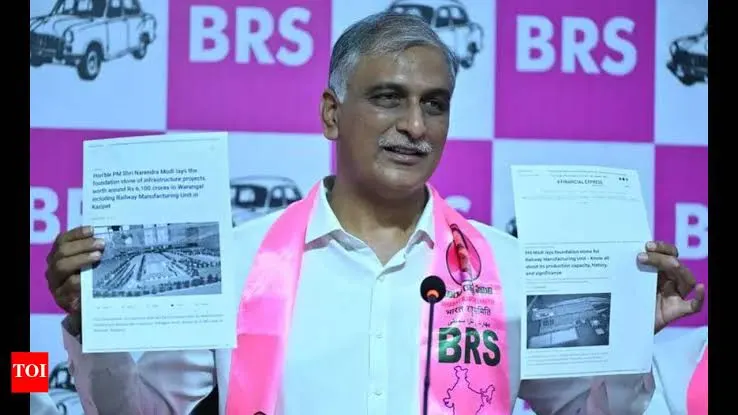
He stressed that the Kaleshwaram pumps should have been run to channel water into reservoirs such as Mid Manair, Mallannasagar, and Baswapur. His concern wasn’t just technical but deeply human. Farmers waiting for irrigation water are being pushed into despair.
- Pumps at Kaleshwaram were allegedly kept idle.
- Reservoirs stayed dry despite huge inflows into Yellampalli and Kadem.
- Political motives were prioritized over farmers’ needs.
For Harish Rao, the issue is about survival: every drop wasted today could have saved fields tomorrow.
Farmers’ Faith in Governance at a Crossroads:
The controversy surrounding Pharma City and floodwater management is reshaping how farmers perceive the government. For years, they have trusted leaders who promised development, infrastructure, and stability. But with one government building and another dismantling, that faith is wearing thin. Farmers who sacrificed land for Pharma City feel cheated, while those waiting for irrigation feel abandoned.
Their trust in political assurances is at a breaking point, as they question whether development projects are for them or just for political headlines. This erosion of faith could have lasting consequences; if people no longer believe that governments act in their interest, it weakens the very foundation of democratic accountability. For Telangana’s leadership, this moment is critical: they must decide whether to restore that trust through action or risk losing it altogether.
KTR’s Criticism of Scrapping Pharma City:
KTR, known for his vision in building Hyderabad as a global hub, strongly criticized the government’s decision to sideline Pharma City. He accused Congress leaders of replacing it with an “imaginary” Future City that lacked planning or substance.
He emphasized that Pharma City was not just a project but a promise: a promise of jobs, international investments, and sustainable growth. Instead, crores of rupees spent on infrastructure are now being wasted.
Key arguments from KTR:
- Pharma City was a tested, researched project aligned with Hyderabad’s pharma dominance.
- Farmers gave their land with expectations of long-term benefits.
- The Congress government risks diverting land into real estate ventures.
For KTR, the scrapping of Pharma City is a betrayal of both public money and public trust.
Farmers’ Silent Struggle Amid Political Blame Games:
Caught between promises and politics, farmers are the ones silently suffering. When reservoirs stay empty despite floods, their fields wither. When Pharma City is scrapped, their sacrifices in giving up land feel meaningless.
Across regions like Siddipet and Medak, farmers express frustration and leaders talk endlessly about development, but ground realities remain unchanged. Many feel abandoned, with their voices drowned out by political speeches.
This is more than economics; it’s emotional. A farmer who gave up land or waited for irrigation feels that promises are being rewritten for political convenience. Their struggle is a reminder that every policy decision has a human face.
“Future City” vs Pharma City: A Development Dilemma
The Congress government’s pitch of “Future City” has triggered skepticism. BRS leaders argue that unlike Pharma City, which had detailed planning and global appeal, Future City appears vague and tilted toward real estate.
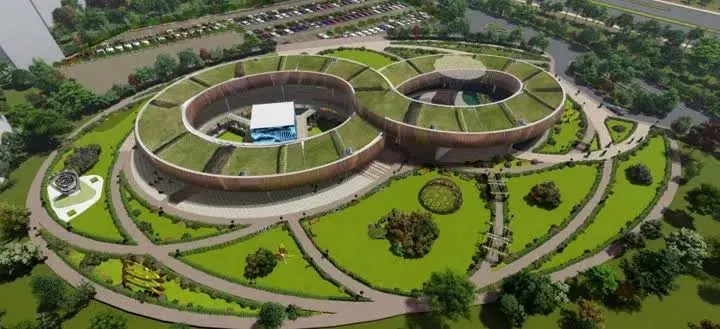
Contrasts highlighted by critics:
- Pharma City: Focused on pharma, biotech, and global investments.
- Future City: Lacks clarity, details, and investment prospects.
- Pharma City groundwork was laid, while Future City remains an idea.
For citizens, this isn’t just about which name sounds better, it’s about whether Telangana will retain its competitive edge or lose ground to uncertainty.
The Political Undertone: Vendetta or Vision
Harish Rao and KTR both argue that the Congress government is driven by vendetta, not vision. They claim projects started under BRS are being stalled simply to erase their legacy.
This raises critical questions for people:
- Should developmental projects be sacrificed for political one-upmanship?
- Who bears responsibility when resources and livelihoods are wasted?
- Is Telangana’s growth being slowed for the sake of party rivalry?
For the public, the answers matter. Ultimately, what they want is a government that delivers, not one that erases history.
Irrigation Neglect and Its Long-Term Impact:
Beyond immediate political criticism, Harish Rao’s concerns highlight a deeper problem, what happens to Telangana’s irrigation future if today’s negligence continues. The failure to store floodwater not only impacts this season’s crops but also weakens long-term agricultural sustainability. Telangana has invested heavily in projects like Kaleshwaram to ensure water security, yet political reluctance to operate pumps risks turning these engineering marvels into wasted infrastructure.
For farmers, this neglect means uncertainty every monsoon, leaving them vulnerable to both drought and flood. The emotional toll is visible in their frustration, as they feel their hard work is being undermined by government inaction. Ultimately, irrigation neglect doesn’t just hurt the present,it compromises the future of Telangana’s farming communities, eroding trust in governance and development promises.
Conclusion:
The criticisms by Harish Rao and KTR are not just about political sparring, they reflect the anxieties of farmers, workers, and citizens. The neglect of floodwater management and the scrapping of Pharma City expose gaps between political promises and people’s realities. Telangana’s people want development, not diversion, and clarity, not confusion. As debates rage on, the true question remains: who will stand for the farmers and for the state’s long-term growth?
FAQs:
Pharma City aimed to make Hyderabad the world’s largest pharma hub, creating lakhs of jobs and driving industrial innovation.
He alleged that the government deliberately failed to divert floodwater into reservoirs, leaving farmers helpless during floods.
He argued that Future City is vague, lacks planning, and seems more like a real estate move than an industrial initiative.
Farmers are impacted by both water mismanagement and the uncertainty surrounding Pharma City, which directly affects their livelihood.
While politics plays a role, the larger issue is public welfare, neglecting projects directly hurts farmers and Telangana’s economic prospects.